Content marketing
How to use AI for content without sounding like everyone else
AI made publishing easy. That's the problem: when everyone can publish more, more stops being an advantage.
 By SlapUp · · 3 min read
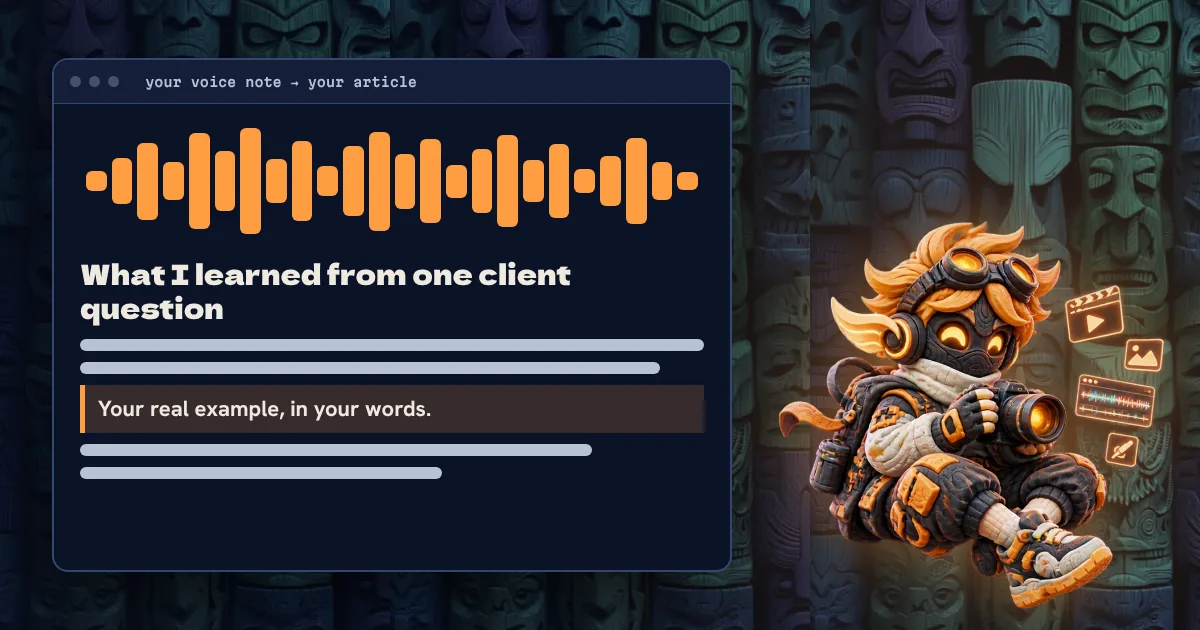
Many professionals now face the same struggle: they feel they should post constantly, they don't have the time, and AI drafts come out polished but empty. The result can sound correct and still say nothing that belongs to you.
What Google cares about
Google's guidance focuses on the quality of content, not simply how it was made. Appropriate use of AI isn't against its guidelines, but mass-producing pages mainly to manipulate rankings is, and Google treats that as spam. So the useful question isn't "did AI touch this?" It's "does this actually help the reader?"
A workflow that keeps you in it
- Your voice note
- AI organizes
- You add examples
- Check the facts
- Read it aloud
1. Start with your material
Record a 10-minute voice note about a client question, a mistake or something you changed your mind about. That gives AI real substance to organize.
2. Use AI as an editor
Ask it to find the main argument, suggest a structure or list what's unclear. Treat what it gives you as a starting point, and write the important sentences yourself.
3. Add what only you can add
Include a real example, a number you can stand behind, or an opinion some people would disagree with. Remove client details unless you have permission to share them.
4. Check every fact
AI can invent statistics and sources that look real. If you can't open the source and confirm it yourself, cut the claim.
5. Read it out loud
If you wouldn't say it to a client, rewrite it. Watch for empty phrases such as "in today's fast-paced world".
Post less, but mean it
One honest article a month, turned into a few posts and a short video, is more manageable than daily filler. It's also much easier to keep doing, which is what makes content work over time.
Want content that sounds like you?
Talk to Flare